Samsung Exynos 2700: Why the Next Galaxy Flagship is Ditching Stacking for a Side-by-Side Redesign
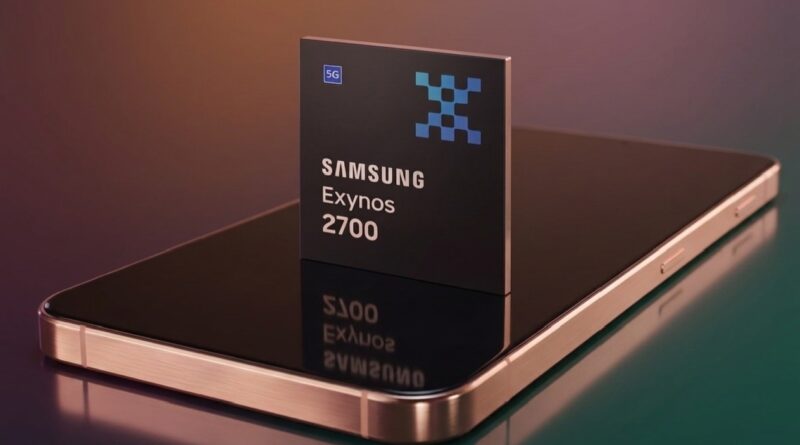
Samsung is reportedly preparing a massive architectural shift for its next-generation flagship processor. According to recent industry reports, the upcoming Exynos 2700—expected to power the Galaxy S27 series—will move away from the company’s current packaging technology in favor of a brand-new layout designed to balance thermal efficiency with manufacturing costs.
Here is a breakdown of what is changing, why Samsung is making the move, and what it means for the future of Galaxy flagships.
Moving Away from FOWLP: The Cost of Innovation
Since the introduction of the Exynos 2400, Samsung has relied on Fan-Out Wafer-Level Packaging (FOWLP). This technology allowed Samsung to stack components efficiently, reducing the chipset’s physical footprint and significantly improving heat management.
However, advanced engineering comes with a premium. Reports indicate that while FOWLP succeeded in keeping recent Exynos chips cool, the complex and costly manufacturing process ultimately chipped away at Samsung’s profit margins. To remain competitive without compromising on performance, a change was necessary.
Enter Side-by-Side (SbS) Architecture
For the Exynos 2700, Samsung is reportedly pivoting to a new design paradigm known as Side-by-Side (SbS) packaging.In the previous FOWLP setup, the Application Processor (AP) and DRAM were vertically layered on top of one another to achieve an ultra-compact footprint.
The new SbS approach fundamentally changes this by positioning the AP and DRAM horizontally next to each other on the substrate. While this requires slightly more surface area, it drastically simplifies the manufacturing process, allowing Samsung to boost production yields and improve overall cost-effectiveness.
Taming the Heat: The Role of Heat Pass Block (HPB)
Spreading components out horizontally solves the cost issue, but it introduces a classic engineering challenge; How do you keep the chip cool without the inherent thermal advantages of vertical stacking? Samsung’s answer lies in its Heat Pass Block (HPB) technology.
By incorporating HPB into the Exynos 2700, Samsung aims to create a dedicated, highly efficient highway for heat dissipation. This localized cooling mechanism is designed to counteract the layout change, ensuring that the processor can sustain peak performance during heavy gaming or intensive AI tasks without thermal throttling.
What This Means for the Galaxy S27 Series
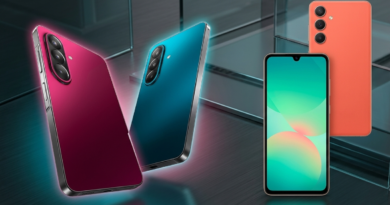
The Exynos 2700 is widely anticipated to be the beating heart behind the Galaxy S27 and Galaxy S27+ in several regions, with an expected launch in early 2027.This architectural pivot represents a calculated risk for Samsung. If the combination of Side-by-Side packaging and HPB cooling succeeds.
Samsung will have created a flagship chipset that is both cheaper to produce and exceptionally cool under pressure. All eyes will be on early 2027 to see if this new layout delivers the premium experience Galaxy users expect.
Frequently Asked Questions (FAQs)
What is the main difference between FOWLP and Side-by-Side (SbS) packaging?
Fan-Out Wafer-Level Packaging (FOWLP) stacks the Application Processor (AP) and RAM vertically on top of each other to save space and improve thermal performance. Side-by-Side (SbS) packaging places these components horizontally next to each other on the same base.
Why is Samsung changing the packaging design for the Exynos 2700?
While FOWLP offered great thermal management, it is a highly complex and expensive manufacturing process. Samsung is shifting to SbS packaging primarily to reduce production costs, improve manufacturing yields, and increase profitability.
Will the new Side-by-Side design cause the Exynos 2700 to overheat?
To prevent potential heating issues caused by moving away from FOWLP, Samsung is integrating Heat Pass Block (HPB) technology. HPB acts as a dedicated cooling block to efficiently draw heat away from the components, aiming to maintain excellent thermal performance.
Which smartphones will use the Exynos 2700 chipset?
The Exynos 2700 is expected to power the base Galaxy S27 and Galaxy S27+ models in selected global regions, such as Europe and parts of Asia.
When will the Exynos 2700 and the Galaxy S27 series launch?
Following Samsung’s traditional release schedule, the Exynos 2700 and the Galaxy S27 series are expected to be officially unveiled in early 2027.