Under-Display Magic or Marketing Hype? Inside Apple’s Upcoming iPhone 18 Pro Power Move
Months ahead of its expected debut, Apple’s next-generation premium flagship series is already dominating the tech conversation. While Cupertino remains characteristically tight-lipped, a steady stream of insider leaks and supply-chain rumors suggests that the iPhone 18 Pro and iPhone 18 Pro Max are gearing up to deliver some of the most substantial hardware upgrades in years. From a revolutionary processor to a groundbreaking camera layout, here is your definitive preview of what to expect this fall.
A Shift in Strategy: Pros Take Center Stage
Apple is expected to stick to its traditional September 2026 launch window, but the rollout strategy itself might look radically different.Reports suggest Apple may delay the standard iPhone 18 and iPhone 18e models until early next year. This strategic pivot heavily shifts the spotlight onto the premium Pro lineup. And while rumors continue to swirl around Apple’s first-ever foldable “iPhone Fold,” early consumer sentiment indicates that the majority of users remain firmly invested in the refined, classic candy-bar iPhone experience.
Design Evolution: A Shrinking Dynamic Island
The most noticeable visual upgrade on the front glass lies in the display cutout. While Apple’s ultimate goal is to tuck Face ID entirely under the glass, current prototypes suggest a transitional yet highly welcome compromise.
- A 35% Smaller Cutout: Thanks to partially relocated under-display Face ID components, the Dynamic Island is expected to shrink significantly, freeing up valuable screen real estate.
- Display Sizes: The iPhone 18 Pro will retain its pocket-friendly 6.3-inch display, while the Pro Max commands the palm with its massive 6.9-inch panel.
- LTPO+ Technology: Both models are tipped to feature advanced LTPO+ display technology, engineered to maximize power efficiency and push peak brightness even further.
Performance & Battery: The 2nm Revolution
Under the hood, the iPhone 18 Pro series is poised to introduce an industry first: Apple’s A20 Pro chipset, manufactured using TSMC’s cutting-edge 2-nanometer (2nm) process.
- The Power of 2nm: The move to a smaller process allows for dense transistor placement, projected to deliver up to 15% faster performance and an impressive 30% leap in energy efficiency over previous models.
Furthermore, Apple is reportedly utilizing WMCM (Wafer-Level Multi-Chip Module) packaging to integrate the RAM directly onto the chip wafer, drastically accelerating local Apple Intelligence processing speeds.To support these heavy AI workloads, Apple is slightly widening the chassis to 8.8mm, carving out internal space for substantial physical battery upgrades. The iPhone 18 Pro Max will feature a massive 5,100mAh to 5,200mAh battery the largest ever fitted inside an iPhone.The iPhone 18 Pro will also see a capacity bump, optimized alongside the LTPO+ display for all-day heavy AI use.
Camera Upgrades: DSLR-Level Control
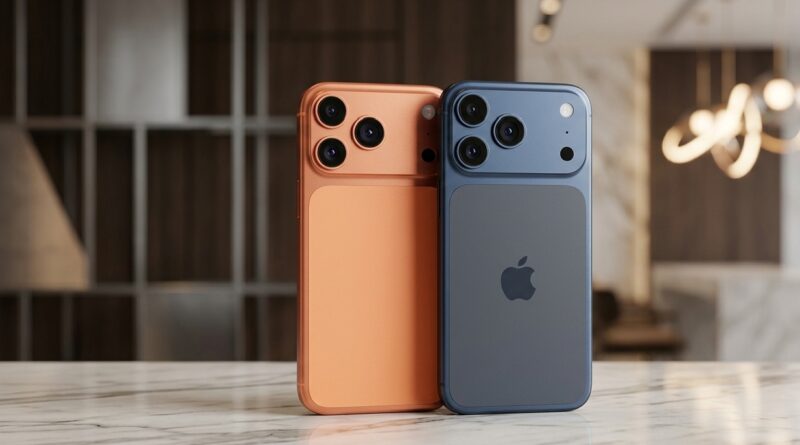
Mobile photography is about to take a massive leap forward. While the iconic triple-camera array remains, the internal glass and sensors are getting a profound overhaul.
- Variable Aperture Main Lens: For the first time, Apple is testing a mechanical, variable-aperture system on its main 48MP sensor. This will allow photographers to manually adjust light intake, granting unparalleled control over exposure and natural depth-of-field.
- Samsung Three-Layer Stacked Sensor: Rumors point to a partnership with Samsung for a highly responsive, stacked image sensor designed to drastically minimize photo noise and maximize dynamic range in challenging lighting.
- Advanced Zoom: The telephoto lens will feature a wider aperture for superior low-light performance, alongside a rumored teleconverter system to cleanly extend optical zoom reach.
- Next-Level Connectivity: The C2 ModemSay goodbye to third-party network chips. The iPhone 18 Pro lineup is heavily rumored to debut Apple’s proprietary C2 modem.
Beyond boosting standard mmWave 5G signals, this custom silicon aims to redefine satellite communication. Moving past basic emergency SOS texts, the new infrastructure could eventually support full satellite internet access and allow third-party apps to function normally in complete dead zones.
Aesthetics, Pricing, and Expectations
Apple is known for introducing a signature hue with every generation, and this year is no exception. Alongside staple finishes like Silver, Dark Grey, and Light Blue, leaks point to a stunning new Dark Cherry finish—a deep, luxurious red with subtle purple undertones.
The Pricing Dilemma
Despite skyrocketing component costs and global RAM shortages that are forcing Android competitors like Xiaomi, OnePlus, and Nothing to hike prices, analysts believe Apple will adopt an aggressive pricing strategy. To maintain market share, Apple is expected to absorb these margins, keeping the entry-level cost identical or only marginally higher than the current generation. In the United States, the series is projected to start around $1,099 for the Pro and $1,199 for the Pro Max (for the base 256GB configurations), with aggressive regional price matching globally.
With just months to go until the curtains rise, the iPhone 18 Pro series is shaping up to be an absolute powerhouse—giving tech enthusiasts plenty of reasons to hold off on upgrading until September.
Frequently Asked Questions (FAQs)
When will the iPhone 18 Pro and Pro Max be released?
The premium iPhone 18 Pro lineup is expected to follow Apple’s traditional launch timeline, debuting in September 2026. However, the standard iPhone 18 and 18e models may see a delayed release until early the following year.
Will the iPhone 18 Pro have a completely under-display Face ID?
Not quite yet. While Apple is actively developing under-display Face ID technology, current reports indicate it isn’t ready for a full rollout. Instead, Apple will shrink the Dynamic Island cutout by roughly 35% by moving some of the sensors beneath the glass.
What makes the new A20 chip different?
The A20 chip will be built using TSMC’s state-of-the-art 2nm manufacturing process. This allows for vastly superior transistor density, yielding a 15% bump in processing speed and a 30% reduction in power consumption compared to older generations. It also utilizes new WMCM packaging to supercharge on-device AI tasks.
What is a variable aperture camera, and why does it matter?
A variable aperture allows the physical camera lens to open and close, altering how much light hits the sensor. This gives users mechanical control over exposure and background blur (bokeh), mimicking the manual adjustments typically reserved for professional DSLR and mirrorless cameras.
What new color choices will be available?
The standout color for this generation is rumored to be Dark Cherry, a deep red with elegant purple undertones. Standard selections like Light Blue, Dark Grey, and Silver are also expected to return.