CRISIS AT SEA: US Destroyer Disables Iranian Ship with “Direct Hit”
OFFICIAL REPORT | GULF OF OMAN – The fragile peace between the United States and Iran has shattered following a high-stakes military engagement in the Gulf of Oman. On Sunday, President Donald Trump confirmed that the USS Spruance, an Arleigh Burke-class guided-missile destroyer, used lethal force to disable and seize the Iranian-flagged cargo ship TOUSKA. ”Blowing a Hole in the Engine Room”
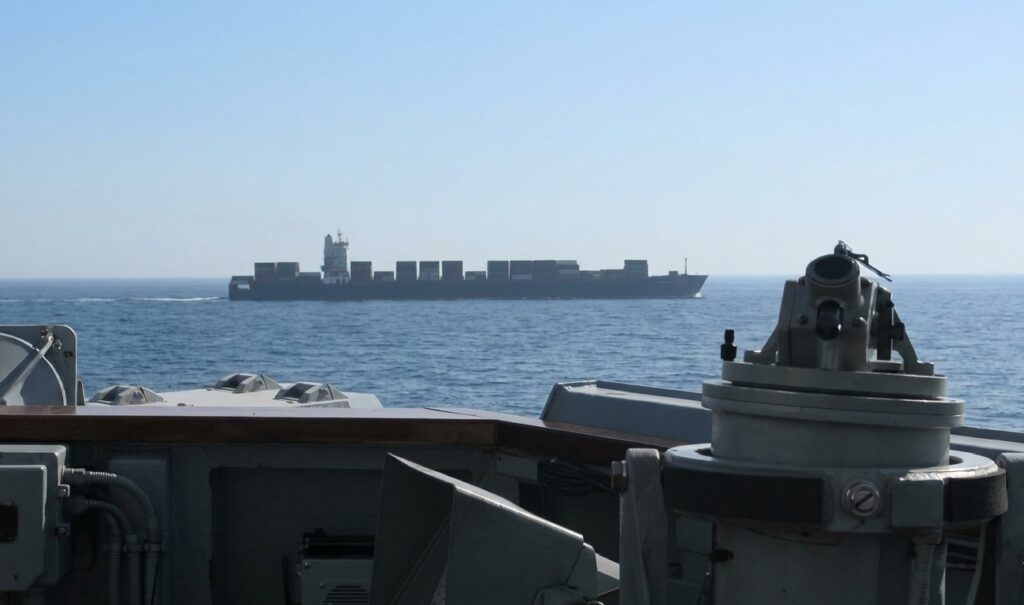
The interception occurred after a tense six-hour standoff. According to official statements and released footage, the 900-foot-long TOUSKA—a vessel roughly the size of an aircraft carrier—ignored repeated warnings to stop.
As the ship surged through the North Arabian Sea, the USS Spruance unleashed its 5-inch MK 45 gun, firing several rounds directly into the vessel’s engine room to permanently disable its propulsion.
“It did not go well for them,” Trump announced. “[Our] Navy ship stopped them right in their tracks… Right now, US Marines have custody of the vessel. We are seeing what’s on board!”
Elite Marines Board the Vessel
Following the kinetic strike, elite US Marines from the 31st Marine Expeditionary Unit (MEU) conducted a boarding operation. Video released by the Defense Department captures the chilling final warning issued to the Iranian crew: “Vacate your engine room. We are prepared to subject you to disabling fire.” The TOUSKA is currently being held under US Treasury Sanctions due to its alleged history of aiding illegal ballistic missile procurement.
Ceasefire on the Brink
This strike marks the first direct military action against a commercial vessel since the US-led naval blockade began on April 13. Tehran has responded with fury, officially labeling the seizure “armed piracy” and a “total violation” of the ceasefire that has been in place since April 8.
The Iranian military’s central command centre, Khatam Al-Anbiya, has already vowed a swift and “retaliatory” response against US military assets in the region.
Global Impact
The intensity of this confrontation has sent shockwaves through the global economy:
- Oil Markets: Brent crude prices surged 6.5%, climbing toward $96 per barrel as the Strait of Hormuz becomes a combat zone.
- Diplomatic Collapse: Tehran has officially rejected any further peace talks, citing Washington’s “excessive demands” and the ongoing naval blockade.
With the current ceasefire set to expire on April 22, the world is now bracing for an all-out military escalation between the two powers.