
A New Dawn for Local Assembly: Pakistan’s Pivot from Imports to Industry
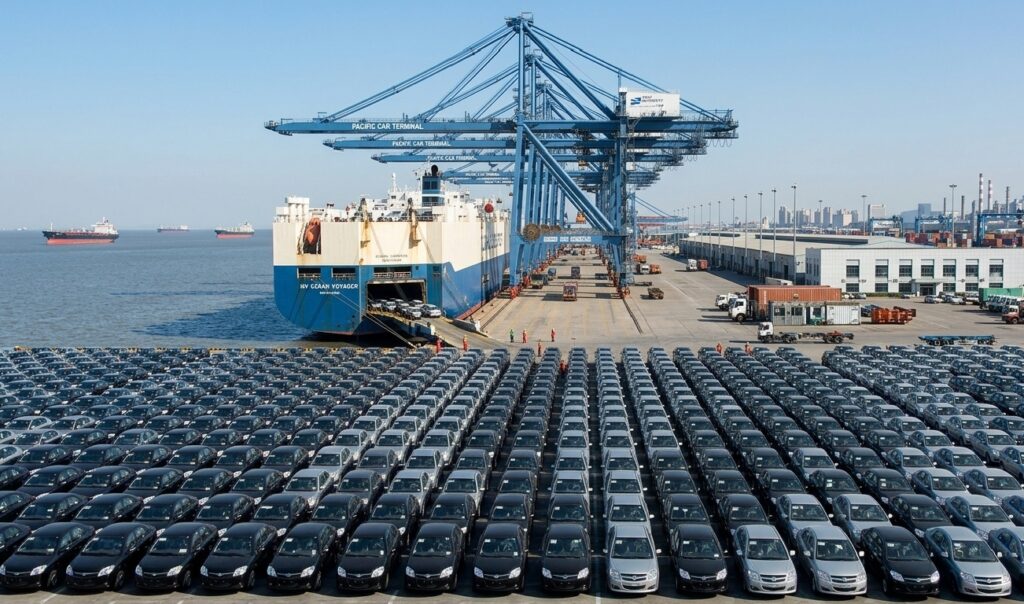
KARACHI — In a move that has sent ripples of optimism through the corridors of Port Qasim and beyond, Pakistan’s automotive sector is bracing for a significant domestic resurgence. The federal government’s decision to phase out the “Baggage Scheme” for used car imports marks a decisive shift in economic policy, prioritizing local manufacturing over the inflow of pre-owned foreign vehicles.
For years, the baggage scheme served as a major loophole, allowing tens of thousands of vehicles to enter the country annually, often at the expense of local assemblers. In the 2025 fiscal year (FY25) alone, a staggering 42,125 units were brought in through various import channels.
The Numbers: Breaking Down the Import Influx
The scale of the “used car challenge” is best understood through the data from FY2025. The various schemes allowed a massive volume of vehicles to bypass the traditional industrial grid:
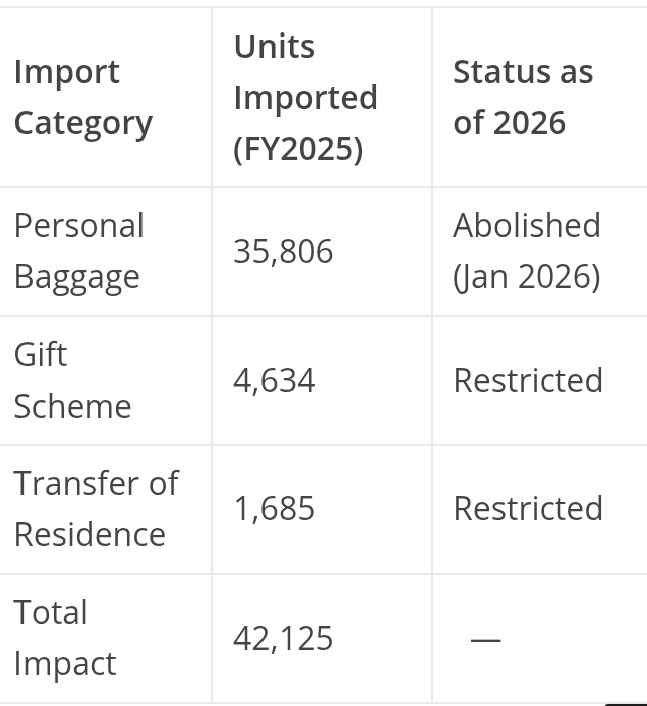
With the Personal Baggage category—which accounted for nearly 85% of these imports—officially abolished in January 2026, the local market is expected to absorb a massive vacuum. Analysts predict at least a 50% shift of this volume (roughly 21,050 units) toward the Completely Knocked Down (CKD) or locally assembled market.
Industry Response: A Vote of Confidence
The move has been met with high praise from the industry’s heavyweights. Indus Motor Company (IMC), a cornerstone of the local auto landscape, hailed the decision as a “landmark” moment.
”I really appreciate the concerted efforts for the growth of the local auto industry, especially abolishing the baggage scheme for used car imports,” stated Ali Asghar Jamali, Chief Executive of IMC.
Jamali credited the stability of the sector to the collaborative efforts of:
- Haroon Akhtar, SAPM on Industries and Production.
- Saif Anjum, Federal Secretary of the Ministry of Industries and Production.
- Hamad Ali Mansoor, CEO of the Engineering Development Board (EDB).
The “Trickle-Down” Economic Impact; The policy shift isn’t just about selling more “Made in Pakistan” cars; it’s about addressing deeper economic inefficiencies. By curbing used imports, the government aims to:
1. Eliminate Idle Capacity: Local plants that were running below their potential can now ramp up production to meet the diverted demand.
2. Job Creation: Increased assembly line activity naturally leads to more opportunities for skilled labor and the local parts-manufacturing (vending) industry.
3. Industrial Sovereignty: Strengthening the local supply chain reduces the long-term reliance on erratic import channels.
The Road Ahead
While the “Baggage Scheme” era draws to a close, the focus now shifts to whether local manufacturers can match the variety and price points that the used car market once provided. With 21,050 units looking for a new home in the local market, the pressure is on for domestic players to innovate and scale.
For the first time in years, the “Roadmap to Localisation” seems to have a clear path forward, trading short-term import convenience for long-term industrial grit.