
Trump Dispatches US Delegation to Islamabad for High-Stakes Iran Talks Amid Blockade Standpast
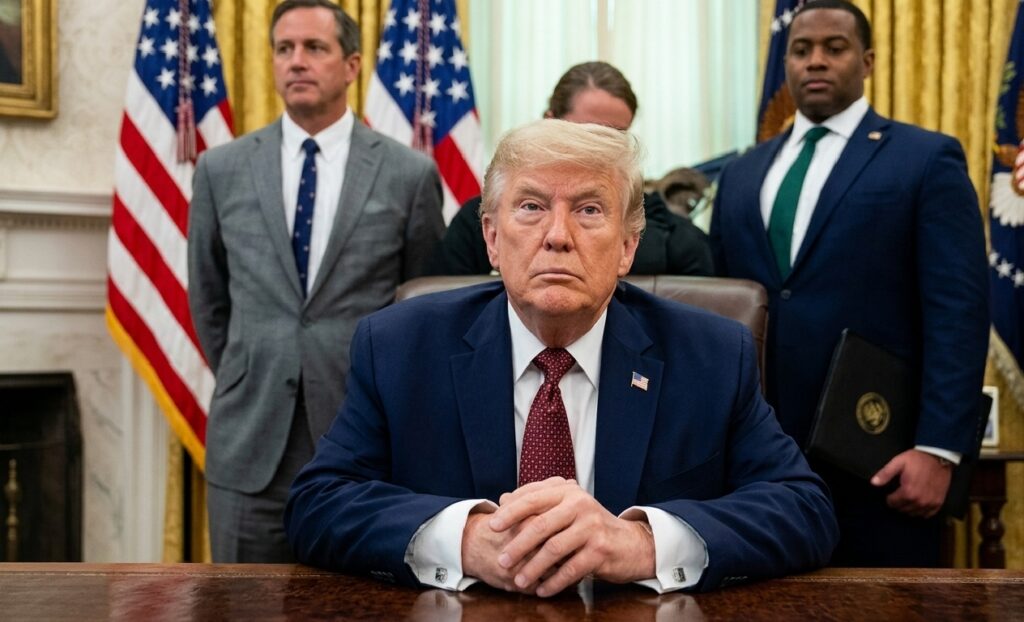
In a critical attempt to de-escalate the burgeoning conflict between the U.S.-Israel alliance and Iran, President Donald Trump has announced that a United States delegation will arrive in the Pakistani capital this Monday. The move comes as a two-week ceasefire nears its expiration, and tensions in the Strait of Hormuz threaten to boil over into a broader regional war.
A Fragile Peace on the Brink
The announcement, made via social media on Sunday, follows a previous round of discussions led by Vice President JD Vance that concluded without a breakthrough. While the President did not specify the members of the upcoming delegation, the stakes could not be higher. Trump has accused Tehran of violating the current ceasefire by opening fire in the Strait of Hormuz on Saturday—a claim Iran denies, instead pointing to a “criminal” U.S. naval blockade.
“We’re offering a very fair and reasonable deal, and I hope they take it,” Trump posted on Truth Social. “If they don’t, the United States is going to knock out every single power plant, and every single bridge, in Iran.”
Tehran’s Resistance: No Talks Without End to Blockade
Despite the U.S. outreach, the prospects for the Islamabad summit remain uncertain. Iranian state media outlets, including Tasnim and IRNA, reported that Tehran has not yet committed to sending a delegation.
The Iranian Ministry of Foreign Affairs has characterized the U.S. naval blockade as a “war crime” and a “crime against humanity,” arguing that the collective punishment of the Iranian population through the restriction of ports is a direct breach of the Pakistani-mediated ceasefire.
Key Sticking Points in Negotiations:
- The Strait of Hormuz: Closed by the IRGC navy, who demand the lifting of the naval blockade before reopening the vital shipping lane.
- Nuclear Program: Iran has described U.S. demands regarding its nuclear facilities as “maximalist.”
- Economic Pressure: The ongoing blockade has reportedly forced at least 23 ships to turn around, according to U.S. Central Command.
The Role of Pakistan as Mediator
Islamabad has emerged as the central hub for these diplomatic efforts. Pakistani Foreign Minister Ishaq Dar and Iranian Foreign Minister Abbas Araghchi held a phone consultation on Sunday to discuss the necessity of continued engagement.
With the ceasefire set to expire this Wednesday, the international community is watching Islamabad closely. While U.S. officials maintain that “good conversations” are happening, Iranian Parliament Speaker Mohammad Bagher Ghalibaf warned that the sides remain “far from the final discussion,” citing fundamental gaps in the proposed framework.
As the U.S. delegation prepares to land in Pakistan, the shadow of renewed military strikes looms large over a region already on edge.