
The Genetic Blueprint of Survival: How Evolution Repeats Itself in the Rainforest
For over a century, biologists have been fascinated by the “copycat” behavior of South American rainforest residents. In a world where being eaten is a constant threat, several species of butterflies and moths—many only distantly related—sport nearly identical wing patterns. A groundbreaking study led by the University of York and the Wellcome Sanger Institute has finally pulled back the curtain on this mystery, revealing that evolution is far less random than we once believed.
The Art of Mimicry: Nature’s Warning Sign
In the dense jungles of South America, looking like your neighbor can be a life-saving strategy. This phenomenon, known as mimicry, occurs when different species evolve similar appearances to signal their toxicity to predators.
If a bird eats one toxic butterfly with a specific red and yellow wing pattern, it quickly learns to avoid anything that looks similar. For other toxic species, adopting that same “uniform” ensures they are skipped over for a snack. While we have known why this happens for years, the how remained locked deep within their DNA—until now.
Reusing the Same Genetic “Switches”
By investigating seven butterfly lineages and one day-flying moth, researchers identified two specific genes responsible for these vibrant warning colors; ivory and optix. The most startling discovery was not that these genes existed, but how they were manipulated across 120 million years of evolution:
- Genetic Switches: Evolution didn’t change the genes themselves. Instead, it modified the “switches” (regulatory elements) that tell the genes when and where to turn on.
- Predictable Pathways: Across different butterfly species, these switches were modified in strikingly similar ways.
- The Moth’s Twist: The day-flying moth used a “DNA flip” known as an inversion mechanism. Remarkably, this exact same rare genetic strategy was mirrored in one of the butterfly species, despite their vast evolutionary distance.
Is Evolution Predictable?
Professor Kanchon Dasmahapatra of the University of York suggests that these findings challenge the idea of evolution as a purely chaotic or random process.”We show that evolution can be surprisingly predictable,” Dasmahapatra noted. “Butterflies and moths have been using the exact same genetic tricks repeatedly since the age of the dinosaurs.
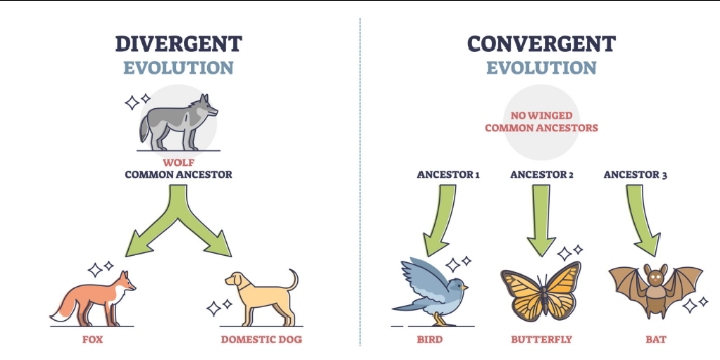
“This concept, called convergent evolution, proves that nature often finds a “best” solution to a problem and sticks with it. Because the genetic basis for these wing patterns is so highly conserved, it is relatively “easy” for different species to evolve the same protective look.
Looking to the Future
Understanding that nature reuses established biological “blueprints” has massive implications for modern science. If evolution follows recurring pathways, scientists might be able to:
- Anticipate Adaptations: Predict how insects might change their physical traits in response to a warming planet.
- Conservation Planning: Better understand which species have the genetic flexibility to survive environmental shifts.
- Genetic Mapping: Identify other “predictable” traits in the animal kingdom that could lead to breakthroughs in biodiversity research.
The study, published in PLoS Biology, serves as a reminder that while the rainforest is a place of infinite variety, beneath the surface, nature is a master of recycling what works.