Punjab Launches ‘Rehmat Card’: A Transparent Financial Safety Net for Widows and Orphans
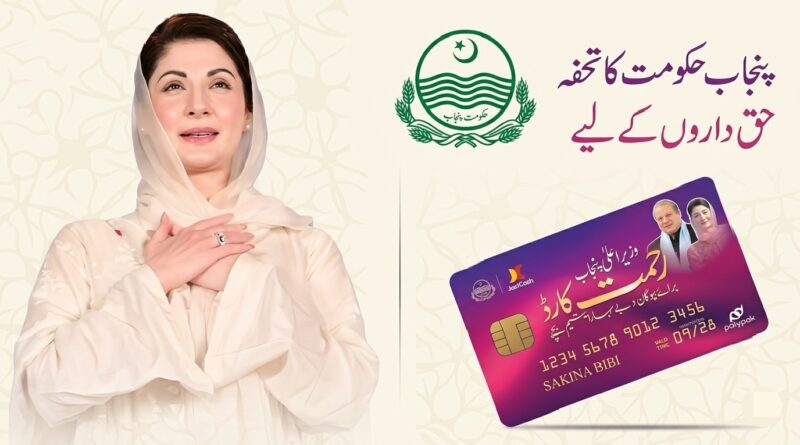
In a decisive move toward strengthening the social safety net for the most vulnerable segments of society, the Government of Punjab has officially launched the Rehmat Card initiative under the Zakat & Ushr Department. By focusing exclusively on Zakat-deserving widows and double-parent (parentless) orphans, this program aims to bridge economic gaps while preserving human dignity.
Built on the pillars of transparency, Shariah compliance, and modern tech-driven governance, the Rehmat Card marks a significant shift from traditional welfare distribution to structured socio-economic empowerment.
Core Objectives: Dignity Through Self-Reliance
The framework of the Rehmat Card program is designed around three primary objectives:
- Targeted Relief: Providing direct financial cushions to widows and parentless children who lack traditional familial support systems.
- Socio-Economic Elevation: Moving beyond mere short-term aid to promote long-term economic empowerment, self-reliance, and social dignity through the card’s financial disbursement.
- Systemic Integrity: Establishing a transparent, fair, and strictly merit-based mechanism for the utilization of public Zakat funds.
Scope and Financial Allocation
The Rehmat Card operates on a province-wide scale, ensuring equitable access across all districts of Punjab. The financial disbursements are structured as fixed, one-time grants to maximize immediate impact:
| Beneficiary Category | Rehmat Card Financial Disbursement |
| Eligible Widows | Rs. 100,000 per individual |
| Double-Parent Orphans | Rs. 100,000 per child |
To ensure regional fairness, the program’s budget is distributed to District Zakat Committees strictly on a population-based allocation formula, ensuring that more populous or underserved districts receive proportionate funding.
Strict Eligibility Criteria
To ensure that the Rehmat Card reaches those genuinely in need, the department has instituted comprehensive eligibility filters in alignment with both provincial regulations and Islamic jurisprudence:
- Religious & Legal Standing: Applicants must be needy Muslim citizens eligible to receive Zakat under Shariah law.
- Exclusion of State Dependents: Government servants, pensioners, and their immediate dependents are ineligible for the card.
- Financial Thresholds: Applicants must not be Sahib-e-Nisab (possessing wealth above the Zakat threshold) nor be regular beneficiaries of any other parallel Punjab Government financial assistance schemes.
- Social Check: The program explicitly excludes habitual beggars, focusing instead on structural poverty alleviation.
Tech-Driven Selection and Procedure
Departing from legacy manual verification processes that are often prone to delays, the Zakat & Ushr Department has introduced a fully digitized, meritocratic workflow for issuing the Rehmat Card.
1. Simple, Multi-Channel Application
Beneficiaries can easily register for the card through three accessible government channels:
- A dedicated Mobile Application
- An official Web Portal
- The Punjab Government Helpline (1077)
2. Mandatory Documentation
To verify identity and legal status, applicants must provide:
- A valid, updated CNIC explicitly reflecting the applicant’s status as a widow.
- The official “B-Form” for orphan children to verify parentage and age status.
3. Data Integration and Final Selection
To eliminate nepotism and political interference, the final selection process relies entirely on data-driven metrics:
- Database Integration: The program cross-references all registrations with the Punjab Socio-Economic Registry (PSER).
- The PMT Filter: Final approval for the Rehmat Card is generated using the Proxy Means Test (PMT) score derived from the PSER database, ensuring absolute transparency and targeting only the poorest of the poor.
The Path Forward
By blending religious obligation with modern data analytics, Punjab’s Rehmat Card sets a new benchmark for social welfare administration. By putting Rs. 100,000 directly into the hands of a grieving widow or a parentless child through an automated, dignified card system, the state is not just providing temporary relief—it is laying down the foundation for an inclusive, self-reliant society.