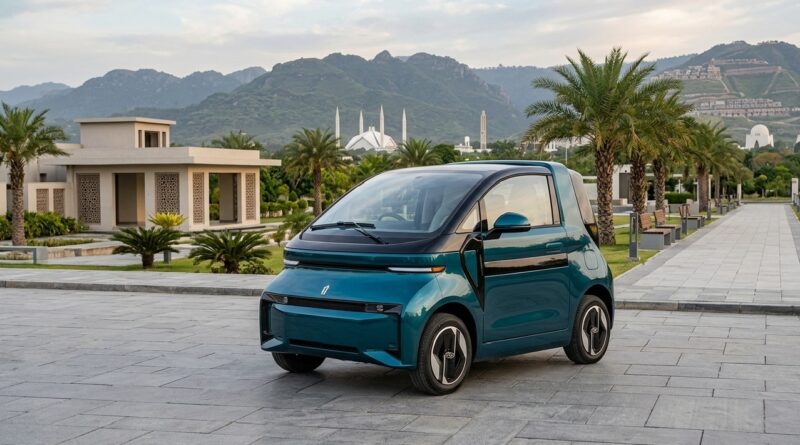
L6 Quadricycles: The Future of Pakistan’s Budget-Friendly Urban Commuting
For decades, the Pakistani middle class has been trapped in a “mobility gap.” On one side, the ubiquitous motorcycle offers affordability at the cost of safety; on the other, entry-level 660cc hatchbacks have drifted into a price bracket—often exceeding Rs. 3 million—that feels like a luxury.
However, a shift is on the horizon. Under the draft New Auto Industry Development & Export Policy (AIDEP) 2026–31, the Government of Pakistan is exploring a game-changing solution: the introduction of the L6 and L7 vehicle categories.
What are L6 and L7 Vehicles?
In the global automotive landscape, L6 and L7 vehicles are known as quadricycles. These sit in the sweet spot between a motorcycle and a conventional passenger car.
- L6 (Light Quadricycles): These are lightweight vehicles (max 350kg) with regulated top speeds, designed specifically for efficient, low-cost neighborhood mobility.
- L7 (Heavy Quadricycles): Slightly more powerful (max 450kg), these offer better utility and higher speeds (up to 70–80 km/h), serving as a bridge for city commuters.
By officially recognizing these categories, Pakistan aims to provide a four-wheeled alternative that is protected from the weather and significantly safer than a bike, without the heavy price tag of a standard car.
The Rs. 15-20 Lakh Dream: Bridging the Affordability Gap
The primary mission of the L6/L7 initiative is to serve the lower-middle-income segment. Current reports suggest that with proposed incentives, these vehicles could hit a price point of Rs. 15 lakh to 20 lakh—roughly half the price of today’s cheapest hatchbacks.
The L6/L7 category targets:
- Motorcycle Upgraders: Families of four currently braving rain and heat on a 70cc or 125cc bike.
- First-Time Buyers: Young professionals seeking a “city pod” for their daily office commute.
- Urban Commuters: Those needing a fuel-efficient, easy-to-park vehicle for the congested streets of Karachi or Lahore.
Economic Impact: Localization and Incentives
This isn’t just about consumer convenience; it’s a strategic move for the national economy. The draft policy includes aggressive measures to ensure these vehicles remain affordable:
- Tax Relief: A proposed 1% Sales Tax (down from the standard 18%) and exemptions from Federal Excise Duty (FED) to keep entry costs low.
- Simplified Manufacturing: The government may allow “powder coating” instead of expensive ED paint shops, lowering the barrier for new manufacturers to enter the market.
- Local Ecosystem: The policy encourages the manufacturing of parts within Pakistan, potentially creating thousands of jobs and reducing the reliance on expensive imported kits.
Safety vs. Savings: A Necessary Compromise?
While the L6 category offers a massive upgrade in weather protection and stability compared to a motorcycle, it does come with a trade-off. To keep prices low, these “city pods” generally lack high-end safety features like multiple airbags or advanced crash structures required for M-category cars.
Experts suggest they should be viewed as upgraded motorcycles—perfect for urban streets, but not intended for high-speed motorway travel.
Frequently Asked Questions (FAQs)
1. What is the main difference between an L6 vehicle and a regular car?
L6 vehicles, or light quadricycles, are smaller, lighter, and have lower power outputs than regular M-category passenger cars. They are specifically designed for urban “last-mile” connectivity and short-distance commuting rather than long-distance highway travel.
2. When will these vehicles be available in Pakistan?
The L6/L7 category is part of the draft AIDEP 2026–31 framework. It is currently under review by the government and stakeholders. If approved, manufacturing and sales could begin as the new policy period kicks off in 2026.
3. Will I need a special license to drive an L6 vehicle?
While final regulations are still being drafted, L-category vehicles typically require a standard driving license. However, because they are categorized differently from heavy passenger cars, registration and licensing fees are expected to be lower.
4. Are L6 vehicles safe for highway use?
L6 quadricycles are primarily designed for city streets and urban environments. Due to their lightweight nature and restricted top speeds, they are generally not recommended—and in many countries, not allowed—on high-speed motorways.
5. Will these vehicles be electric or petrol-powered?
The policy framework is designed to be technology-neutral, meaning manufacturers could introduce both fuel-efficient petrol engines and Electric Vehicle (EV) versions of L6 and L7 models to suit consumer preferences.
The Road Ahead
The AIDEP 2026–31 framework is currently under review, with the government weighing feedback from local assemblers and vendors. If approved, this policy could finally democratize four-wheel ownership in Pakistan, turning the dream of a safe family vehicle into a tangible reality for millions.
Stay Tuned to PKfeed to get more updates regarding L6 cars.