Strait of Hormuz Crisis: Global Energy Markets at Risk as US-Iran Deadlock Deepens
The geopolitical landscape of the Middle East has reached a volatile stalemate. Following a ceasefire initiated on April 8, diplomatic efforts between Washington and Tehran have hit a wall, leaving the world’s most critical maritime corridor—the Strait of Hormuz—in a state of suffocating paralysis.
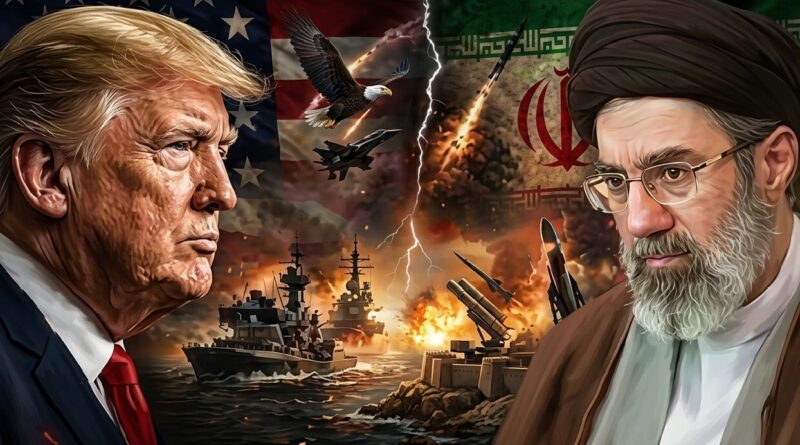
On Sunday, Iran’s Revolutionary Guards (IRGC) delivered a blunt ultimatum to President Donald Trump: choose between an “impossible” military campaign or a “bad deal” with the Islamic Republic.
The Diplomatic Deadlock
The friction centers on a 14-point peace proposal submitted by Tehran. While the details of the plan remain under review by both sides, reports suggest Iran has set a high bar for cooperation.
- The Proposal: According to Axios, the plan demands a one-month deadline to negotiate the reopening of the Strait of Hormuz, the lifting of the US naval blockade, and a permanent end to hostilities in Iran and Lebanon.
- The Rebuttal: President Trump has been quick to dismiss the overture. Posting on Truth Social, he argued that Tehran has “not yet paid a big enough price” for its historical actions, signaling that the US is in no rush to offer concessions.
Economic Warfare and Global Fallout
The conflict is no longer just a regional skirmish; it has evolved into a global economic crisis. The dual blockades—Iran’s closure of the Strait and the US embargo on Iranian ports—have sent shockwaves through the market.
- Energy Crisis: With the Strait of Hormuz choked off, oil prices have surged approximately 50% above pre-war levels.
- The “Suffocation” Strategy: US Treasury Secretary Scott Bessent confirmed that the goal is a total economic embargo. “We are suffocating the regime… they are not able to pay their soldiers,” Bessent stated, highlighting the “all hands on deck” approach of the American administration.
- Domestic Strain: Inside Iran, the situation is dire. Inflation has topped 50%, and residents describe a population surviving on dwindling personal savings.
Escalating Rhetoric
As diplomacy stalls, the language from both capitals has turned increasingly bellicose. President Trump warned of potential military action in West Palm Beach, stating that if Iran “misbehaves,” new American strikes are a “possibility that could happen, certainly.
“In response, Mohsen Rezaei, a military adviser to Iran’s Supreme Leader, used even harsher language. He threatened to turn the Gulf into a “graveyard” for US aircraft carriers and labeled the United States as the “only pirate in the world.” Meanwhile, Germany’s Foreign Minister Johann Wadephul expressed the growing anxiety of European allies, demanding that Iran “verifiably renounce nuclear weapons” and immediately reopen the Strait to prevent further economic damage to the West.
The Nuclear Wildcard
A major sticking point remains Iran’s nuclear program. While US envoy Steve Witkoff has pushed to bring atomic negotiations back to the table, Tehran has countered by calling US demands “hypocritical,” pointing to Washington’s own massive nuclear arsenal.
Curiously, some Iranian officials seem to be pivoting their strategic focus. Ali Nikzad, deputy speaker of Iran’s parliament, recently suggested that “Managing the Strait of Hormuz is more important than acquiring nuclear weapons,” signaling that control over global energy flow may be Tehran’s ultimate leverage.
Conclusion
With the US maintaining a “maximum pressure” blockade and Iran holding the global energy supply hostage, the margin for error is razor-thin. As the IRGC noted, the room for decision-making is narrowing. Whether the next move is a breakthrough deal or a catastrophic military engagement depends on which side blinks first in this high-stakes game of global chicken.