Strait of Hormuz: Iran Warns of Global Energy Crisis as US Naval Blockade Tightens
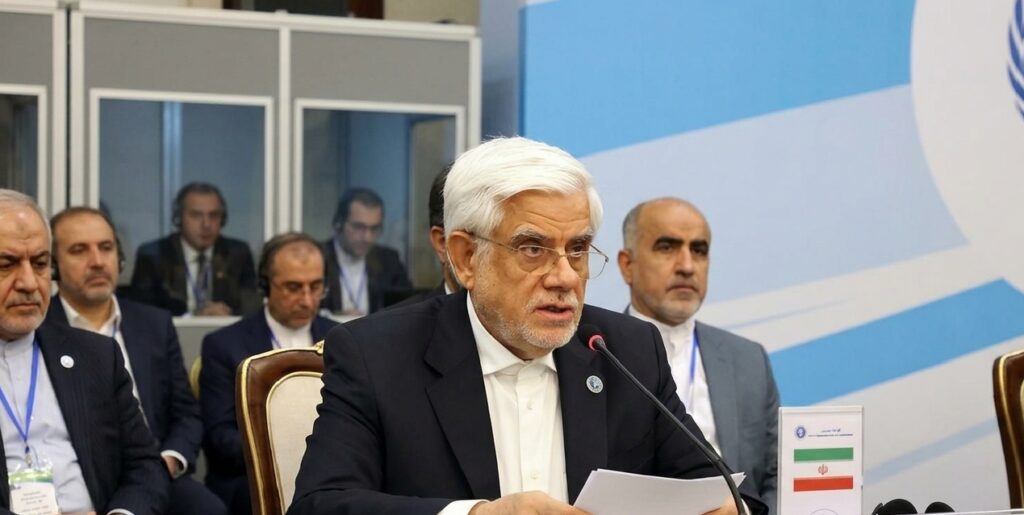
The fragile stability of the global oil market is hanging by a thread. Following a period of intense military conflict and a tightening US naval blockade, Iran has issued a stark ultimatum regarding the Strait of Hormuz—the world’s most critical energy chokepoint.
”Security is Not Free”: The Ultimatum from Tehran
Early Monday morning, Iran’s First Vice President, Mohammad Reza Aref, took to social media to deliver a clear message to the international community; if Iran cannot export its oil, the security of the Strait of Hormuz can no longer be guaranteed.
”No one can restrict Iran’s oil exports while expecting free security for others,” Aref stated, emphasizing that “security of the Strait of Hormuz is not free.”
Aref’s comments present a binary choice for global powers; either allow a free oil market for all nations or prepare for “significant costs for everyone.” According to Tehran, the stabilization of global fuel prices is now directly linked to a permanent end to the economic and military pressure currently being exerted against Iran and its regional allies.
Context: From Offensive to Blockade
The current tension is the result of a rapid escalation that began on February 28, when a joint US-Israeli offensive targeted Iranian interests. The ensuing conflict resulted in over 3,300 deaths before a temporary ceasefire was brokered.
Key Timeline of the Crisis:
- February 28: US and Israel launch a joint offensive; Iran retaliates against regional assets.
- April 8: A two-week ceasefire is announced, mediated by Pakistan.
- April 11-12: Initial talks in Islamabad end without a formal agreement.
- April 13: The US imposes a naval blockade on Iran, severely restricting its ability to move oil.
The Role of Pakistan: The Islamabad Dialogue
As the April 8 ceasefire nears its expiration, all eyes are on Islamabad. Pakistan has emerged as the central mediator in this high-stakes diplomatic game.
A second round of crucial talks is scheduled to begin this Tuesday in the Pakistani capital. With the first round ending in a stalemate and the US blockade currently in full effect, the Islamabad talks represent perhaps the last chance to prevent a total shutdown of the Strait—a move that would send global oil prices into an unprecedented spiral.
What’s at Stake for the World?
The Strait of Hormuz is the artery of the global economy, with nearly one-fifth of the world’s oil consumption passing through it daily. If Iran follows through on its warning:
- Energy Prices: Fuel costs could skyrocket overnight, impacting everything from transportation to manufacturing.
- Global Supply Chains: A maritime standoff could disrupt shipping lanes far beyond the energy sector.
- Regional Stability: The transition from a “shadow war” to a direct blockade suggests that the risk of a full-scale regional conflict is at its highest point in decades.
As delegates prepare for the Tuesday session in Islamabad, the world waits to see if diplomacy can reopen the markets—or if the “significant costs” Aref warned of are about to become a global reality.
Seems like a tough situation over there. What do you think the impact will be on global oil prices?