
The Paper Bag Secret: Why the King of Fruits Needs to Breathe
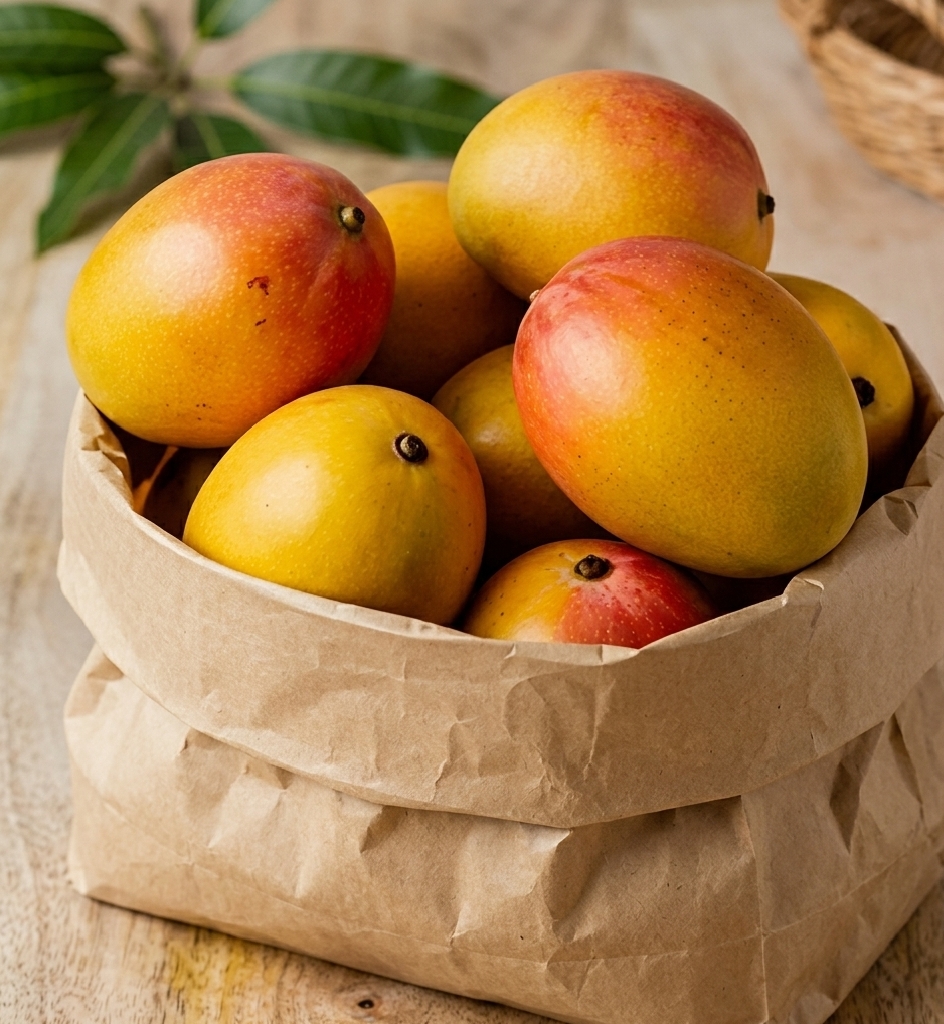
As summer heat rolls in, the unmistakable aroma of ripening mangoes begins to fill the air. While we often treat the “King of Fruits” with royal enthusiasm, we frequently fail its delicate needs by tossing it into the fridge or suffocating it in plastic. If you want the perfect bite every time, it’s time to swap the crisper drawer for a simple paper bag.
The Science of the “Ethylene Hug”
Mangoes are unique because they don’t stop maturing once they leave the tree. As they ripen, they release ethylene gas. When you place a mango in a paper bag, you are essentially creating a natural incubation chamber. The bag traps the gas just enough to speed up the ripening process evenly, concentrating the sugars and maximizing sweetness without the need for artificial intervention.
Why Plastic is the Enemy
Unlike a paper bag, plastic is non-porous. It traps heat and moisture, which leads to:
•Rapid Rotting: Internal heat builds up, causing the fruit to ferment.
•Suffocation: Without air circulation, the fruit loses its characteristic texture.
•Staleness: Lack of “breathability” turns a vibrant fruit into a mushy mess.
Managing Moisture and Mold
Summer humidity is a mango’s worst nightmare. Paper is naturally absorbent, acting as a moisture-wicking shield. It soaks up excess humidity on the fruit’s surface, preventing the growth of mold and keeping the skin firm and clean.
•A Natural Alternative to Chemicals
Market-bought mangoes are often ripened using harsh chemicals like calcium carbide, which can be harmful to your health. By choosing slightly under-ripe mangoes and finishing the process at home in a paper bag, you ensure a 100% natural ripening process. It is a safe, chemical-free way to enjoy the fruit exactly as nature intended.
The Golden Rule
Storing mangoes in paper bags isn’t just an old wives’ tale; it’s a scientific necessity. To preserve the original aroma, nutrients, and that buttery texture, skip the cold and the plastic—let your mangoes breathe in their own natural shelter.