Navigating the Ultimate Car Showdown: Toyota Yaris vs. Hyundai Elantra
When shopping for a reliable, tech-forward, and fuel-efficient daily driver, two names inevitably dominate the conversation: the Toyota Yaris and the Hyundai Elantra.
While both vehicles offer excellent driving dynamics, they approach the market from slightly different angles. The Yaris champions ultra-practicality, a compact footprint, and legendary resale value. On the other hand, the Elantra steps up in size, offering a larger frame, striking futuristic aesthetics, and aggressive technology upgrades.
Here is a comprehensive breakdown to help you decide which vehicle deserves a spot in your garage.
Exterior Design: Subtlety vs. Sci-Fi
The visual identity of these two cars could not be more distinct.
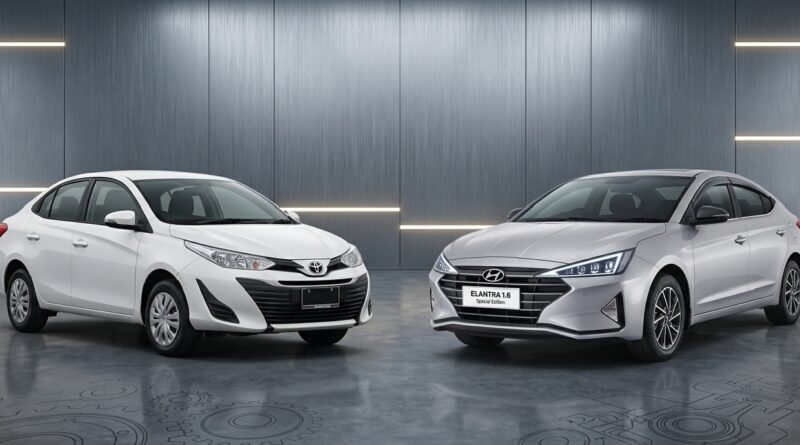
The Toyota Yaris focuses on sleek, conservative styling. It features a clean front grille, standard LED lighting on upper trims, and a practical ground clearance of 175mm. This makes it exceptionally well-suited for handling bumpy city streets and high speed breakers without breaking a sweat.
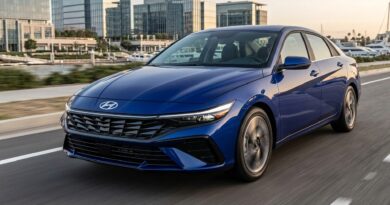
In stark contrast, the Hyundai Elantra is designed to be a head-turner. Embracing a bold, geometric design language, it boasts sharp creases along the side panels, an aggressive wide grille, and a dramatic fastback roofline. It sits lower and wider, giving it a much sportier, road-hugging stance.
Cabin Space, Comfort, and Technology
Stepping inside reveals a clear difference in target audiences. Because the Elantra is a larger vehicle overall, it holds a natural advantage in raw cabin volume. It feels like a driver-centric cockpit, offering upscale features like ambient lighting, optional premium leatherette, and dual 10.25-inch panoramic displays on higher tiers.
The Yaris, however, maximizes its smaller footprint beautifully. It focuses on durable fabrics, an ergonomic dashboard layout, and a highly intuitive mix of analog and digital controls. Surprisingly, the Yaris actually wins when it comes to cargo utility, offering an incredibly generous 476-liter boot that outclasses the Elantra’s 420-liter capacity. However, if you regularly transport tall adults in the back seat, passengers will appreciate the superior rear legroom and shoulder room of the Elantra.
Engine Performance and Driving Dynamics
Under the hood, the performance philosophies diverge significantly to match their design cues.
The Yaris is built for optimal fuel economy and effortless urban commuting. Depending on your market, it typically features a highly efficient 1.3L or 1.5L 4-cylinder engine. Paired with either a 5-speed manual or a smooth CVT, the power delivery is predictable, easy to manage in heavy traffic, and famously light on gas.
The Elantra brings more muscle to the pavement. Its base models feature either a 1.6L or a 2.0L engine pushing out roughly 147 horsepower. When paired with its intelligent variable transmission, the Elantra feels much quicker on the highway and offers more responsive acceleration when passing or changing lanes at higher speeds
Total Cost of Ownership: Reliability vs. Features
Your ultimate choice may come down to what you value most over the lifespan of your vehicle.
Choosing the Toyota is an investment in peace of mind. It enjoys an ironclad global reputation for mechanical durability. Maintenance is straightforward, spare parts are readily available and affordable, and when you are eventually ready to sell, the Yaris retains its resale value remarkably well.
Hyundai, on the other hand, packs an immense amount of near-luxury value into their pricing. Buying an Elantra means getting cutting-edge safety features, such as Lane Departure Warning and Blind Spot monitoring alongside a premium, tech-heavy ride that punches well above its actual price tag.
Final Verdict
The Toyota Yaris is the ideal choice if you want a highly efficient, bulletproof companion that is easy to park, handles rough roads effortlessly, and will hold its financial value exceptionally well over the years.
The Hyundai Elantra is the winner if you crave tech-heavy features, aggressive styling, and a larger cabin. If you spend a lot of time on the highway and want a more powerful engine paired with eye-catching modern tech, the Elantra is the clear way to go.
Frequently Asked Questions
Which car offers better fuel efficiency?
The Toyota Yaris is the clear winner when it comes to fuel economy. Thanks to its smaller, highly optimized 1.3L or 1.5L engines and lighter body, it sips fuel conservatively, making it incredibly cost-effective for daily urban commuting compared to the larger engines in the Elantra.
Which vehicle has a better resale value?
The Toyota Yaris holds its resale value exceptionally well over time. The market heavily favors Toyota for its legendary reputation for reliability, cheap spare parts, and a vast network of service centers, ensuring your investment stays protected.
Is the Hyundai Elantra more comfortable for long road trips?
Yes, the Elantra offers a more comfortable experience on longer journeys. Because it sits in a larger size class, it provides superior cabin space, better legroom for rear passengers, and a wider wheelbase that feels more planted and stable at highway speeds.
Does the Toyota Yaris scrape over high speed bumps?
With a generous ground clearance of 175mm, the Yaris is highly praised for its ability to clear rough terrain, broken tarmac, and high speed breakers easily, even when carrying a full load of passengers.
What are the primary safety differences between the two cars?
While both vehicles come equipped with essential safety systems like anti-lock brakes and standard airbags, the Hyundai Elantra offers more advanced, high-tech driver assistance features on its premium trims, including advanced stability systems, lane assists, and blind-spot monitoring.