
Tragic Loss in the Skies: Pentagon Names Six Airmen Killed in KC-135 Tanker Crash Over Iraq
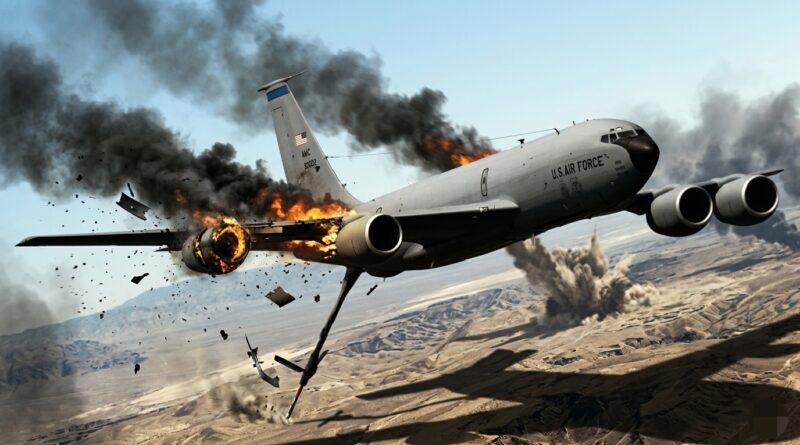
The United States Department of Defense has officially identified the six service members tragically killed when their Boeing KC-135 Stratotanker crashed in western Iraq. The incident occurred during active combat support missions under Operation Epic Fury, marking a somber chapter in the ongoing regional conflict.
U.S. Defense Secretary Pete Hegseth honored the fallen airmen, hailing them as “American heroes” who made the ultimate sacrifice while operating the vital, yet often unsung, backbones of American airpower.
Honoring the Fallen Crew
The crew was composed of three active-duty U.S. Air Force personnel and three members of the Ohio Air National Guard. The Pentagon released their identities:
- Maj. John “Alex” Klinner, 33, of Auburn, Alabama (U.S. Air Force)
- Maj. Ariana G. Savino, 31, of Covington, Washington (U.S. Air Force, posthumously promoted)
- Tech. Sgt. Ashley B. Pruitt, 34, of Bardstown, Kentucky (U.S. Air Force)
- Capt. Seth R. Koval, 38, of Mooresville, Indiana (Ohio Air National Guard)
- Capt. Curtis J. Angst, 30, of Wilmington, Ohio (Ohio Air National Guard)
- Tech. Sgt. Tyler H. Simmons, 28, of Columbus, Ohio (Ohio Air National Guard, posthumously promoted)
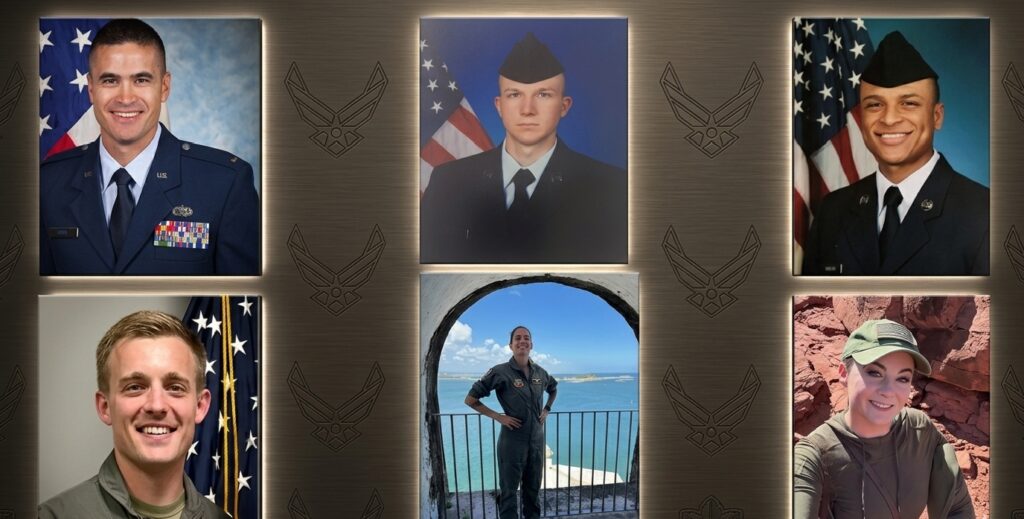
The active-duty airmen were assigned to the 6th Air Refueling Wing based at MacDill Air Force Base in Florida, while the National Guard personnel belonged to the 121st Air Refueling Wing out of Rickenbacker Air National Guard Base in Ohio.
Two Aircraft Involved: The Scope of the Incident
According to U.S. Central Command (CENTCOM), the tragedy involved two KC-135 Stratotankers operating over western Iraq near Turaibil, situated along the strategically sensitive Iraqi-Jordanian border.
While the first tanker suffered a catastrophic crash that took the lives of all six crew members, the second KC-135 managed to land safely at Ben Gurion Airport in Israel. Flight-tracking data revealed that the surviving aircraft had also transmitted a “7700” international emergency squawk code before landing, with subsequent photos revealing severe damage to its tail section.
The Role of the KC-135 Stratotanker
Engineered by Boeing and utilized since the 1950s, these “flying gas stations” provide mid-air refueling via an extended rear boom. They allow combat fighter jets to sustain prolonged missions without landing, making them prime targets for high-stress operational environments.
The Investigation: Accident vs. Hostile Claims
As investigators piece together the final moments of the flight, two conflicting narratives have emerged regarding the cause of the disaster:
1. The Official U.S. Position: Midair Collision
U.S. defense officials told CBS News that initial assessments point to a tragic midair collision between the two tankers during a complex aerial refueling maneuver. CENTCOM explicitly stated that the disaster took place within “friendly airspace” and affirmed that the loss of the aircraft was “not due to hostile or friendly fire.”
2. Conflicting Claims from Regional
MilitiasDespite the U.S. military’s statements attributing the crash to an accident, Iran’s military claimed on state television that an allied proxy group had successfully targeted the aircraft with a missile. The Islamic Resistance in Iraq—an umbrella group of Iran-backed armed factions operating heavily in western Iraq—issued a statement claiming responsibility, asserting they brought the plane down to “defend their sovereignty.”
Rising Toll in a Growing Conflict
The loss of the KC-135 crew underscores the growing risks faced by U.S. forces deployed in the Middle East. This crash brings the official American military death toll to 13 since the escalation of hostilities a fortnight ago.It also marks the fourth U.S. military aircraft lost during this campaign. The incident follows an earlier mishap in Kuwait, where three F-15E Strike Eagle fighter jets were mistakenly downed in an apparent friendly-fire incident, though all six crew members in that scenario successfully ejected and survived.
As a formal investigation gets underway, a dignified transfer ceremony was held at Dover Air Force Base in Delaware, where President Donald Trump, Defense Secretary Pete Hegseth, and military leadership stood in silence to welcome home the flag-draped caskets of the fallen crew.