
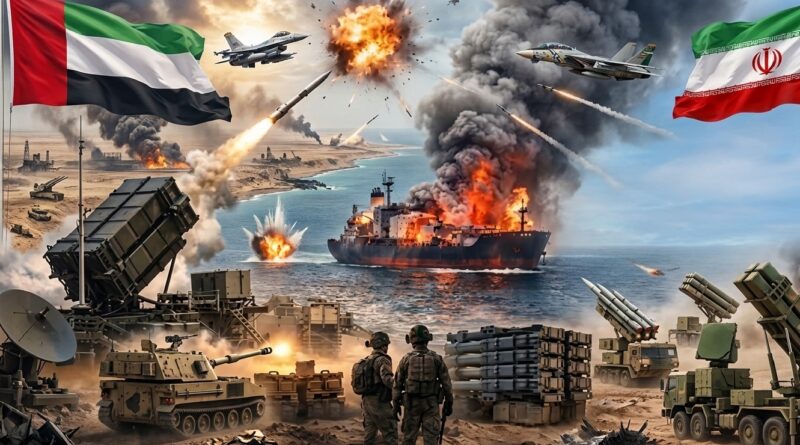
Flashpoint Fujairah: UAE Thwarts Iranian Missile Barrage as Regional Truce Crumbles
ABU DHABI – The shadow of war has once again lengthened over the Persian Gulf. In a dramatic escalation of regional hostilities, the United Arab Emirates (UAE) successfully intercepted a coordinated wave of Iranian ballistic missiles, cruise missiles, and suicide drones on Monday.
The attack marks a definitive end to the fragile, month-long ceasefire and signals a dangerous new chapter in the standoff over the world’s most vital energy gateway.The UAE Ministry of Defence confirmed that its advanced aerial shield neutralized three ballistic missiles directed at major population centers.
While a fourth missile fell into the sea, the psychological impact was felt across the country as air raid sirens echoed through the Emirates, shattering the relative calm that had persisted since early April.
The Strike on Fujairah and the Human Cost
While the majority of the incoming threats were neutralized, the strategic emirate of Fujairah became a primary target. An Iranian drone managed to penetrate local defenses, striking a major oil facility and sparking a massive blaze. According to the Fujairah Media Office, civil defense teams worked through the afternoon to contain the fire.
The human toll of the strike was felt by the expatriate community; three Indian nationals were moderately injured in the explosion and are currently receiving treatment at a nearby medical facility.This strike followed a separate, condemned attack on the ADNOC tanker Barakah off the coast of Oman, highlighting a clear pattern of targeting energy infrastructure to exert pressure on the global economy.
Diplomacy Collapses in the Strait
The roots of Monday’s violence lie in the breakdown of negotiations in Islamabad. Despite mediation efforts by Pakistan, the United States and Iran remain deadlocked over the blockade of the Strait of Hormuz. Tension reached a boiling point after President Donald Trump announced that the U.S. military would begin active operations to escort trapped commercial vessels out of the blockaded waterway—a move Tehran characterized as an act of war.
As the U.S. Navy mobilized, Iranian state media reported that their naval forces had fired “warning shots” at American warships. The subsequent missile barrage against the UAE appears to be a direct retaliatory response to the Emirates’ support of the maritime escort initiative.
A “Dangerous Escalation” on the World Stage
The international reaction was swift and stinging. From Amman to Brussels, world leaders characterized the breach of the ceasefire as a “brutal attack” on sovereign territory. European Union President Ursula von der Leyen issued a stern warning on social media, stating that the strikes were a “clear violation of international law” and that the security of the Gulf remains a direct priority for European stability.
The UAE has vowed to maintain a state of maximum readiness. While Iranian officials have issued conflicting statements—ranging from claims of “no plans to target the UAE” to overt threats against “unwise” actions—the reality on the ground is one of heightened alert. With the ceasefire effectively dissolved and military assets converging on the Strait of Hormuz, the region stands at its most precarious crossroads in decades.