Pakistan’s Balancing Act: Navigating a Global Energy Crisis While Securing the Nation’s Future
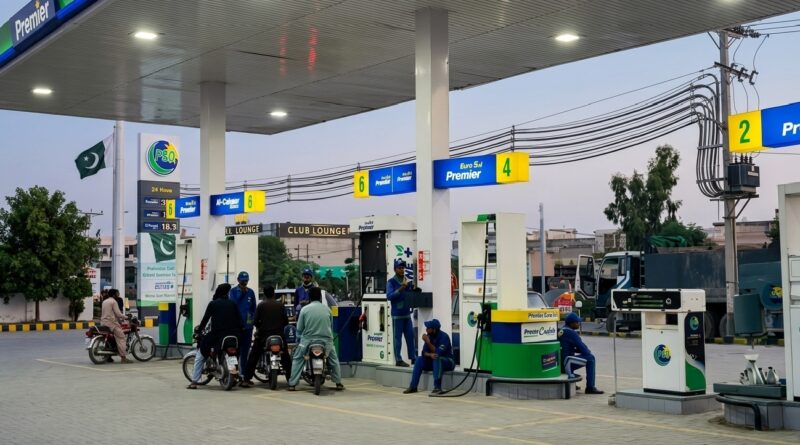
In a decisive yet difficult step toward long-term fiscal stability, the Government of Pakistan recently announced a significant increase in the prices of petroleum products. The prices of petrol and high-speed diesel (HSD) were raised by Rs26.77 per litre, bringing the new rates to Rs393.35 and Rs380.19, respectively. While any hike in fuel costs inevitably puts a strain on the public, this move represents a critical component of a broader strategy to stabilize a fragile economy and fulfill international commitments essential for the nation’s financial survival.
The Global Landscape: A World of Uncertainty
To understand the government’s decision, one must first look at the state of the world’s economy. We are currently living in an era of intense geopolitical volatility. From the ongoing tensions in the Middle East to the lingering disruptions in global supply chains, the cost of energy has become a weapon of circumstance.
For an oil-importing nation like Pakistan, these external shocks are not merely news headlines; they are direct hits to the national treasury. Petroleum Minister Ali Pervaiz Malik highlighted that regional tensions have once again pushed oil prices upward in the global market. In this context, the government is often forced to “transfer the burden” of these rising costs to maintain the country’s fiscal health. While the global market for petrol remained relatively stable during this specific period, the overarching pressure of high energy costs worldwide leaves little room for subsidies.
The IMF and the Path to Economic Sovereignty
At the heart of this price adjustment lies Pakistan’s relationship with the International Monetary Fund (IMF). The government is currently working toward the approval of the fourth loan tranche of a $7 billion bailout package. For a country facing a balance-of-payments crisis, the IMF’s support is not just an option—it is a lifeline that prevents a catastrophic economic default.
The IMF has set clear, albeit rigorous, benchmarks for revenue collection. One of the primary tools for this is the Petroleum Levy. While the IMF suggested a uniform tax of Rs80 per litre on both petrol and diesel, the government has had to navigate a complex political and social landscape. By setting the levy on petrol at Rs107.4 per litre, the administration is attempting to meet revenue targets while trying to mitigate the immediate inflationary impact that a higher diesel tax would have on the masses.
Strategic Protection of the Agriculture Sector
The decision to focus the tax burden on petrol rather than diesel is a calculated one. Diesel is the lifeblood of Pakistan’s agriculture and freight sectors. It powers the tractors that harvest our food and the trucks that transport it to cities. A massive, unchecked spike in diesel prices would lead to an immediate and sharp rise in the price of basic food items—a scenario the government is desperate to avoid.
By absorbing some of the pressure on diesel and placing a higher levy on petrol—used largely by private car owners and motorcyclists—the government is attempting a “pro-poor” balancing act. While the middle class feels the pinch at the petrol pump, the goal is to keep the cost of bread, milk, and vegetables from skyrocketing beyond the reach of the most vulnerable citizens.
Pass-through Relief: Kerosene and Light Diesel
It is also important to note that the government has not ignored opportunities to provide relief. As global prices for certain products dipped, the administration immediately passed those savings on to the public.
- Kerosene Oil: Prices were slashed by a massive Rs63.6 per litre, bringing it down to Rs365.
- Light Diesel Oil (LDO): Prices were reduced by Rs29 per litre.
These fuels are primarily used by low-income households for cooking and by small-scale industries. By lowering these prices, the government demonstrated that its priority is to provide relief whenever the international market allows for it.
Fiscal Discipline and the Future
The current economic conditions in Pakistan require a level of fiscal discipline that is often painful. To manage the petroleum levy and provide a “historic relief package” to the people, the federal government even took the difficult step of slashing the federal development budget by 17% (Rs173 billion).
This shows a government that is willing to make internal sacrifices to manage the immediate needs of the population. The collection of Rs1.2 trillion in petroleum levies during the first nine months of the fiscal year—meeting 82% of the annual target—proves that the state is on track to achieving the stability required to regain investor confidence.
The Road Ahead: Resilience and Recovery
The road to economic recovery is rarely smooth. With a new Climate Support Levy set to increase in July and further IMF reviews on the horizon, the challenges remain significant. However, the government’s proactive approach in meeting international standards while protecting the domestic supply chain suggests a long-term vision.
As regional peace remains a hope for the future, the current measures are designed to ensure that Pakistan remains a viable, sovereign economy in a turbulent world. The “midnight squeeze” at the pump is undeniably tough, but it is a necessary part of a larger effort to ensure that the nation’s “tank” never truly runs dry. By choosing the path of fiscal responsibility today, Pakistan is securing a more stable and prosperous tomorrow for all its citizens.