Strategic Limbo: Trump Extends Ceasefire While Tightening the Noose on Tehran
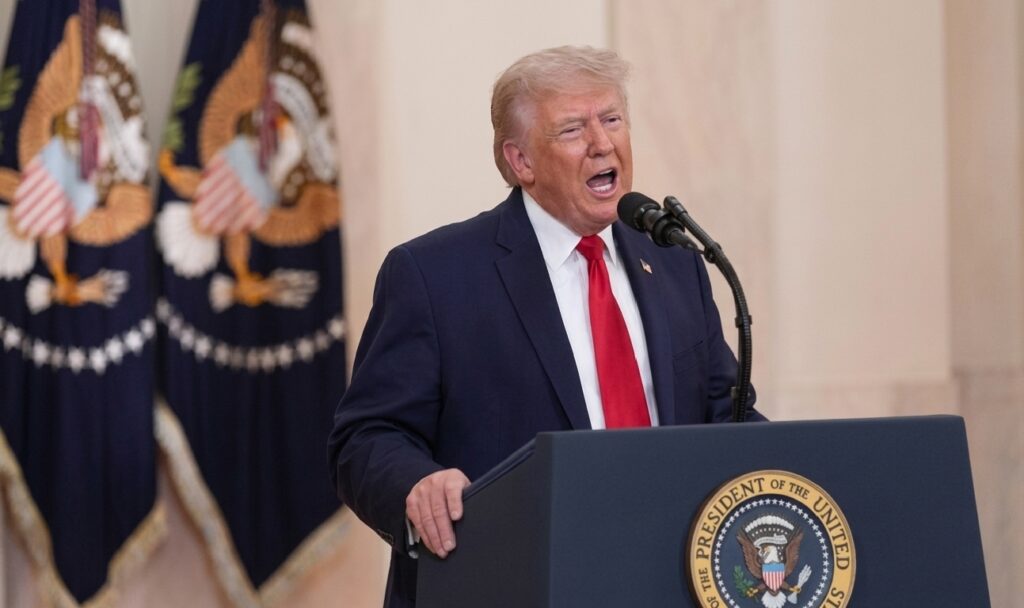
In a high-stakes gamble of “maximum pressure” diplomacy, President Donald Trump announced Wednesday that he is extending the U.S. ceasefire with Iran. The move, intended to provide space for a “unified proposal” from a fractured Iranian leadership, simultaneously doubles down on a controversial naval blockade that Tehran has branded an “act of war.”
The decision comes at a moment of extreme volatility. While the President’s rhetoric suggests a desire to wind down the conflict, the reality on the ground—and at sea—tells a story of a region teetering on the edge of renewed total war.
Diplomacy at the Brink
The extension follows a direct appeal from Pakistani mediators, including Prime Minister Shehbaz Sharif and Field Marshal Asim Munir. Pakistan has emerged as the central hub for peace efforts, hosting the “Islamabad Talks” in an attempt to stabilize the region.
However, the path to a deal is littered with obstacles:
- The “Unified Proposal” Demand: Trump’s strategy hinges on the belief that the Iranian government is currently too divided to negotiate. By extending the truce, he is effectively demanding that Tehran’s competing factions—the reformists and the IRGC—speak with a single voice.
- Vance’s Stalled Trip: In a sign of the uncertainty, U.S. Vice-President JD Vance did not depart for Islamabad as expected on Tuesday. Washington appears to be waiting for a concrete signal of Iranian cooperation before committing to high-level face-to-face talks
- The Blockade Deadlock: Trump has remained firm that the U.S. naval blockade of Iranian ports—and the tightening grip on the Strait of Hormuz—will continue. Iran’s Foreign Minister Abbas Araghchi has counter-argued that no negotiation can happen “under the shadow of threats.”
Regional Fallout and Escalation Risks
While the U.S. and Iran engage in a diplomatic chess match, the broader Middle East remains a powderkeg.
1. The Gulf’s Economic Strain
The conflict is taking a heavy toll on U.S. allies. Reports suggest the United Arab Emirates is seeking a currency swap with Washington to secure U.S. dollars as the war rattles its oil-rich economy. Trump confirmed the idea is “under consideration,” a rare admission of the financial fragility currently gripping the Gulf.
2. IRGC Threats
The Islamic Revolutionary Guard Corps (IRGC) has issued its most dire warning yet. General Majid Mousavi stated that if neighboring Gulf states allow their territory to be used for U.S. attacks, their own oil production facilities would be targeted.
”If the southern neighbors allow the enemy to use their facilities to attack Iran, they should say goodbye to oil production in the Middle East region,” Mousavi warned.
3. Violence in the Levant and West Bank
The “ceasefire” remains largely a technicality in other theaters:
- West Bank: In al-Mughayyir, Israeli settlers and soldiers reportedly opened fire during a confrontation, killing two Palestinians, including a 14-year-old boy.
- Lebanon: Despite a 10-day truce, Israeli strikes in southern Lebanon have continued to wound civilians, further complicating U.S.-led efforts to host ambassador-level negotiations between Israel and Lebanon in Washington, D.C.
Conclusion: A Calculated Pause
President Trump’s “mixed messaging”—alternating between conciliatory offers of time and the hardline enforcement of a blockade—has unsettled global markets and sent oil prices fluctuating. Some analysts view this as a calculated strategy to force Iran into a corner where they must choose between a comprehensive new deal or total economic collapse. As shipping through the Strait of Hormuz remains paralyzed, the world is left wondering if this extension is the first step toward peace, or merely the quiet before an even larger storm.