
The Boy Who Broke the Chains: The Immortal Legacy of Iqbal Masih
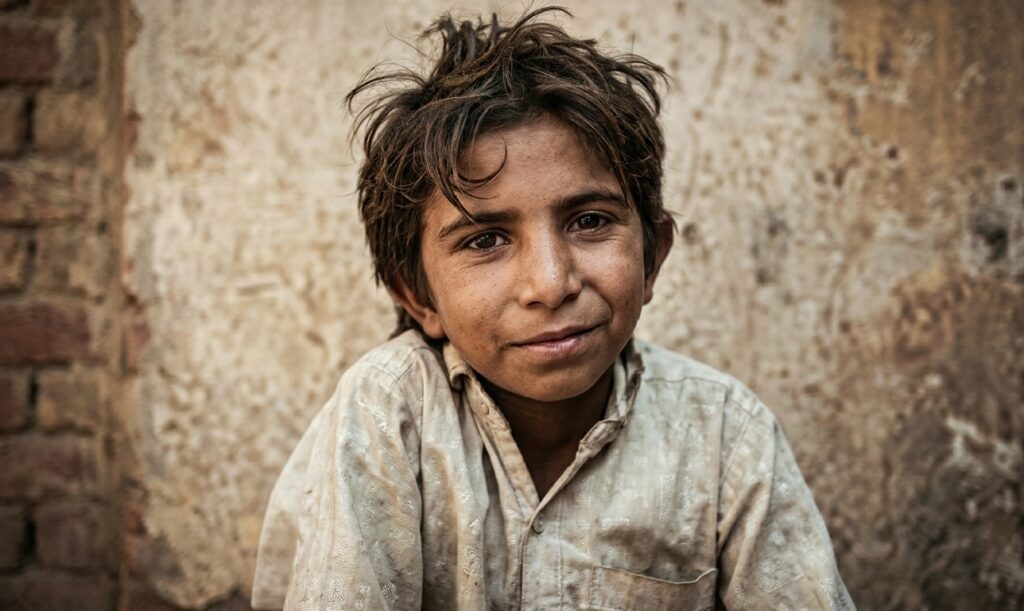
In the heart of Punjab, Pakistan, a legend was born not out of privilege, but out of the sheer, unyielding power of the human spirit. His name was Iqbal Masih, and though he stood only four feet tall, his shadow looms larger than the giants of industry who tried to break him.
Sold for the Price of a Meal
Iqbal’s story began in the darkest of circumstances. At the age of four—a time when most children are learning to play—Iqbal was sold into bonded labor for just 600 rupees. For six years, he was a prisoner of the loom, chained to a carpet-weaving machine 12 hours a day, seven days a week.
The cruelty was calculated; Factory owners intentionally underfed children like Iqbal, hoping stunted growth would keep their fingers thin and nimble for intricate knots. But while they successfully stunted his body, they could not stunt his soul.
The Moment of Defiance
At age ten, Iqbal did the unthinkable; he ran. After escaping his captors, he discovered a meeting of the Bonded Labour Liberation Front (BLLF). Learning that his slavery was not just a tragedy but a violation of Pakistani law, the young boy found a weapon more powerful than the chains that had bound him, his voice.Iqbal didn’t just speak, he roared.
He began a crusade that resonated far beyond the borders of Lahore. With a bravery that shamed the silent, he helped liberate 3,000 children from the same fate he had escaped. He became a global symbol of resistance, traveling to Sweden and the United States to tell the world that the “luxury” carpets in their homes were woven with the blood and tears of children.
”I want to do for the children of Pakistan what Abraham Lincoln did for the slaves of America.” — Iqbal Masih
A Hero’s Sacrifice
Iqbal knew he was a marked man. The “Carpet Mafia” saw his advocacy as a threat to their profits. Yet, when offered safety and a scholarship in America, he chose to return home. He famously said that his mission—the freedom of his brothers and sisters—was more important than his own life.
On Easter Sunday, 1995, that life was tragically cut short. While riding his bicycle in his village, Iqbal was assassinated. He was only 12 years old.
The Legacy That Cannot Be Shot
His killers thought a shotgun could silence the movement. They were wrong. Today, Iqbal Masih is not remembered as a victim, but as a liberator.
April 16 is now recognized as the World Day Against Child Slavery in his honor.The U.S. Congress continues to issue the Iqbal Masih Award to those fighting child labor globally.
A school built in Pakistan by American students stands as a living monument to his dream of education over exploitation.
Iqbal Masih’s life is a reminder that bravery has no age, and freedom has no price. He taught us that even the smallest hands, when joined together, can break the heaviest chains. He was a small boy with a giant heart, and his message continues to echo; Children should carry pens, not tools.